


- Innovation
- Strategy
- Experience
- International Brand
- Competitive Prices
- Quality Delivery
- Cost Effectiveness
Products
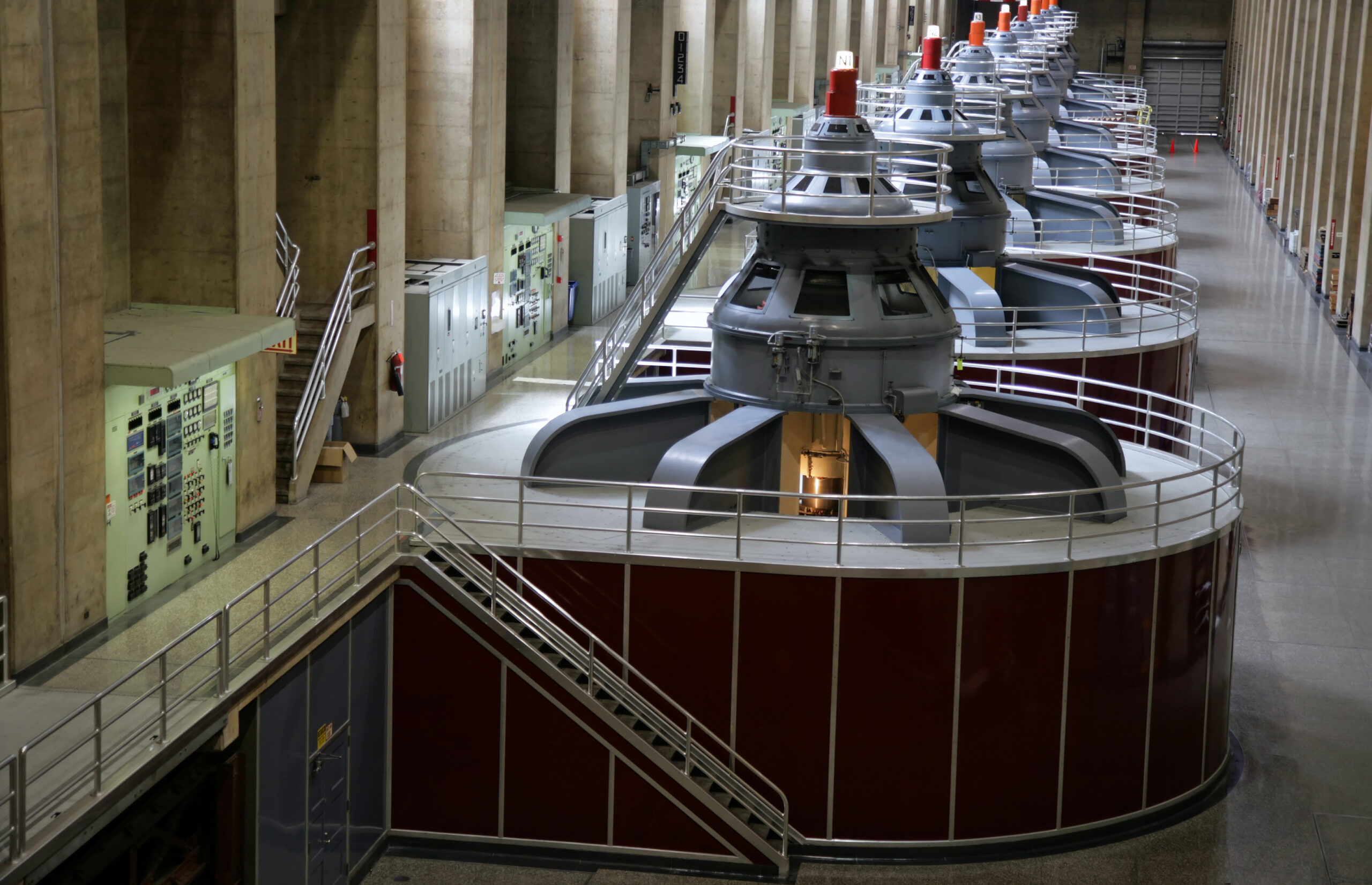
Water Turbine
A water turbine is a rotary machine that converts the kinetic and potential energy of water into mechanical work, which is then often used to generate electricity.hese machines are the "heart" of hydropower systems, which harness the power of flowing water from sources like rivers and dams. They can be broadly classified into two main types: action (impulse) turbines, like the Pelton turbine, and reaction turbines.
How they work
•Energy conversion: The turbine uses the force of moving water, directed at its rotating blades (the runner), to spin a rotor.
•Mechanical to electrical: This rotation is transferred via a shaft to an electric generator, which converts the mechanical energy into electricity.
•Types of energy: Turbines convert both potential energy (e.g., from water held at a height in a dam) and kinetic energy (from the speed of flowing water).
Types of water turbines
•Action (Impulse) Turbines:
•Convert all potential energy into velocity in a fixed distributor before the water hits the runner.
•The pressure is constant across the runner.
•Example: Pelton turbine.
•Reaction Turbines:
•Convert potential energy partly in the distributor and partly within the runner itself.
•Pressure changes as water flows through the runner.
•Examples: Francis and Kaplan turbines.
Applications
•Hydropower plants: Used to generate large-scale electricity from dams and rivers
•Microhydropower systems: Used for smaller-scale power generation, suitable for homeowners, farms, and small businesses.
•Pumped-storage hydroelectricity: In times of low demand, water is pumped to a higher reservoir; when demand rises, the water is released to spin the turbines, generating electricity.
- Product description

